
Younghye Seo Whitney awarded PhD
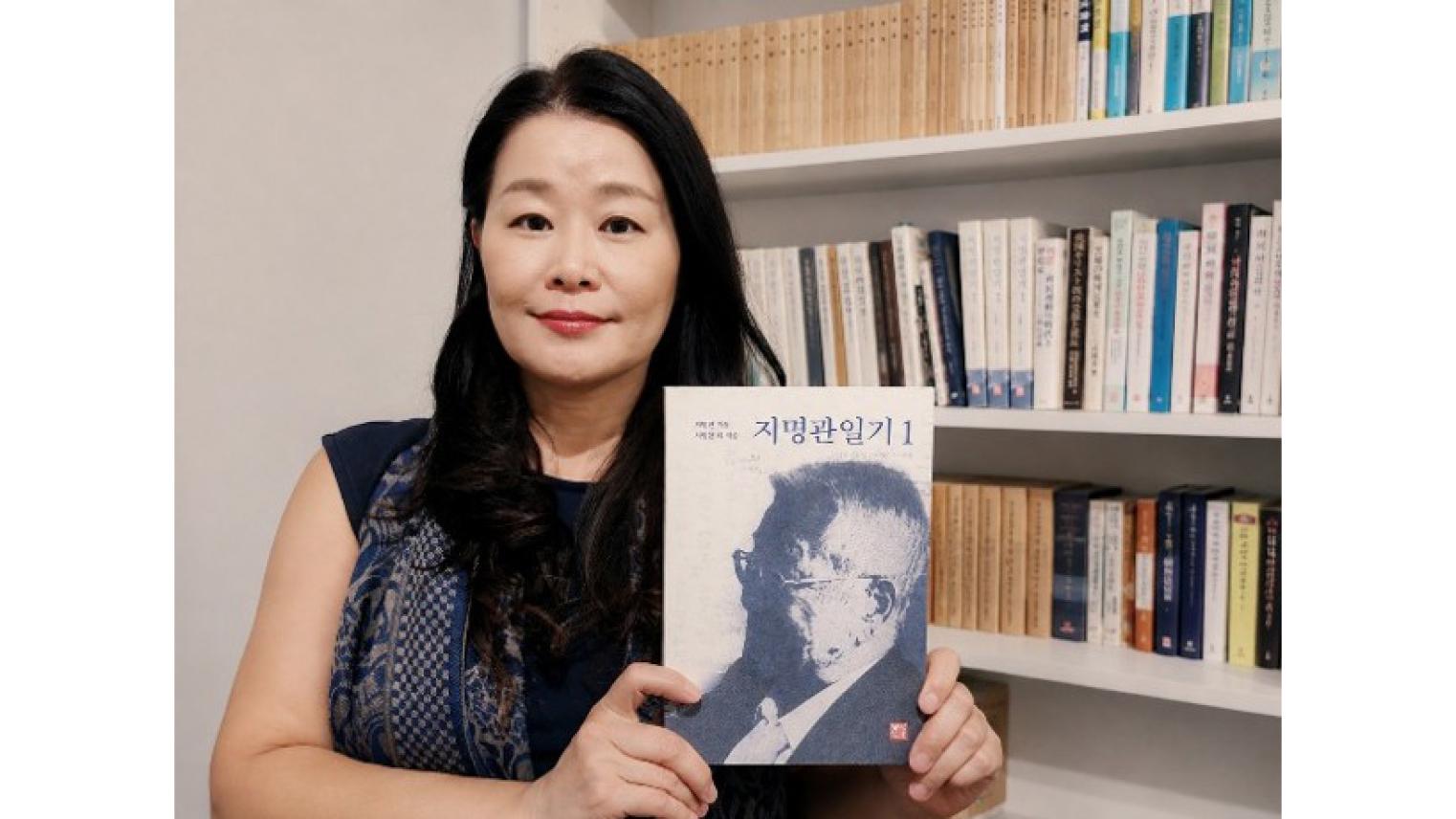
The ANU Japan Institute congratulates Younghye Seo Whitney on the successful completion of her Doctor of Philosophy.
Younghye's thesis examines the transnational networks that supported South Korea's pro-democracy movement during the authoritarian Yusin period, with particular attention to the pivotal role played by Japan-based intellectuals, publishers, Christian organisations, and civil society.
Drawing on previously unpublished archival materials from both Korea and Japan, her research focuses on the life and work of Korean intellectual Chi Myŏng-gwan (1924–2022), who lived in exile in Japan for many years. Chi is best known as the anonymous author of Letters from South Korea, a series published in the influential Japanese monthly Sekai between 1973 and 1988. At a time when press freedom in South Korea was severely restricted, these essays provided Japanese readers with firsthand accounts of political repression and the growing movement for democracy.
A major contribution of the thesis is its use of Chi's personal diaries, which reveal the people, relationships, and behind-the-scenes efforts that sustained this remarkable advocacy. The diaries document the collaboration between Korean and Japanese scholars, journalists, editors, politicians, and religious leaders who worked together to support democratic change across national borders.
As part of this project, Younghye also served on the publication committee for the first volume of Chi Myŏng-gwan's Diaries, contributing to the transcription of the original handwritten diaries and the preparation of scholarly annotations. The publication provides an important new resource for researchers of Japanese Studies, Korean Studies, and modern East Asian history.
Reflecting on the project, Younghye said:
'One of the most rewarding aspects of this research has been uncovering the stories of Japanese individuals whose quiet commitment to democracy and human rights has often been overlooked. Their friendships, courage, and willingness to support those facing persecution in South Korea remind us that democratisation was not only a domestic struggle, but also a transnational one.
Completing this research has been a long and rewarding journey. I am deeply grateful to my supervisors—Professor Simon Avenell, Professor Mark Caprio, and Dr Lauren Richardson—for their exceptional guidance, encouragement, and unwavering support throughout my candidature.
There are many others I would like to thank, but I would especially like to express my deepest gratitude to the late Professor Chi Myŏng-gwan, whose remarkable life and writings inspired this research, and to the late Professor Rikki Kersten, whose encouragement and support gave me the confidence to pursue this project.'
Younghye hopes her research will contribute to a broader understanding of the historical connections between Japan and Korea and encourage further scholarship on the transnational dimensions of democratic movements in East Asia.
The ANU Japan Institute congratulates Younghye on this significant achievement and wishes her every success in the next stage of her academic career.